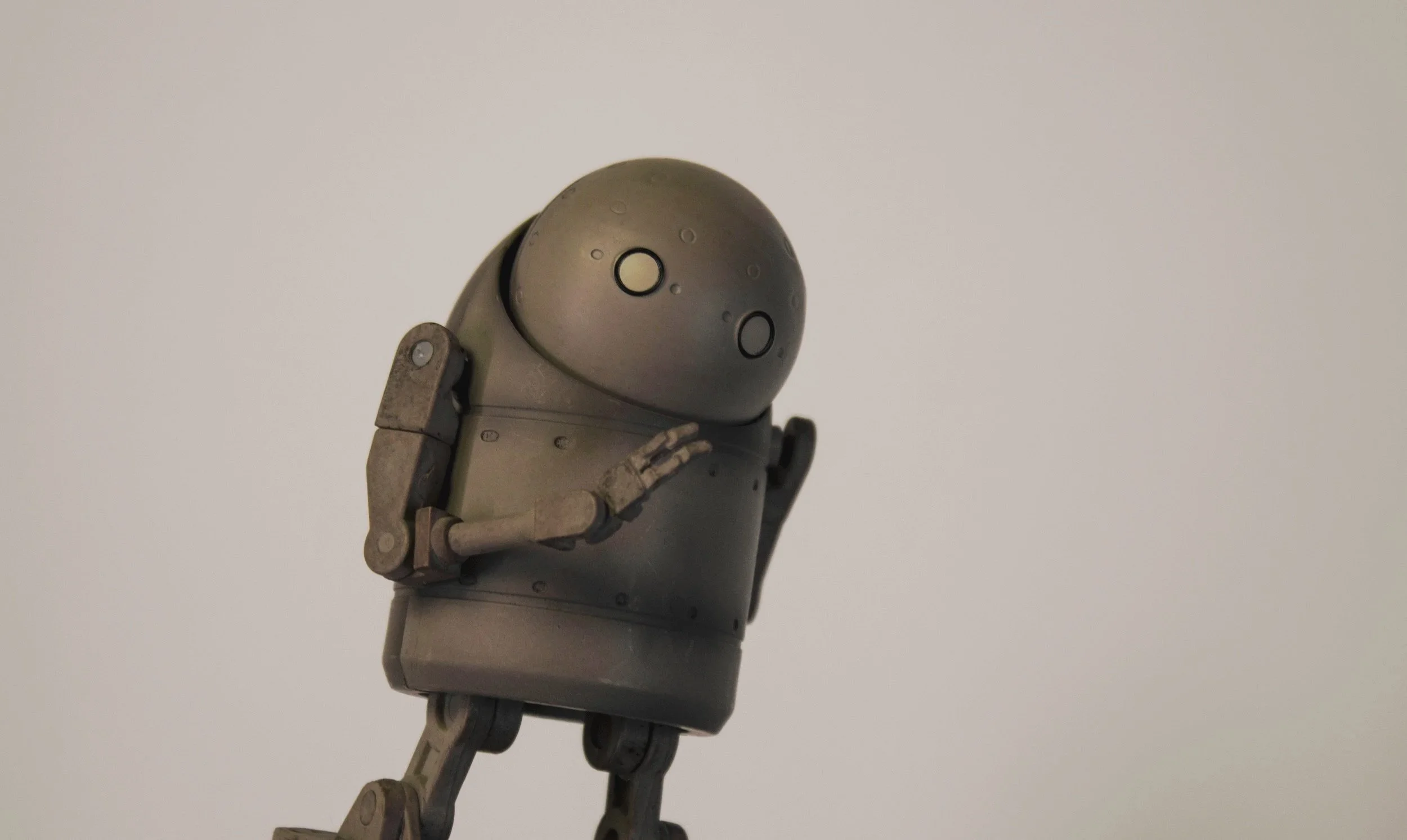
More and more businesses are using AI chatbots as receptionists. There is nothing inherently wrong with that.
A chatbot can answer simple questions quickly. It can be available outside normal business hours. It can direct visitors to the right page, explain basic procedures, and reduce the amount of repetitive work that human staff have to perform.
However, once a business allows a chatbot to speak on its behalf, a very simple question arises:
Does anyone actually review what it says?
If the answer is no, the problem is no longer merely technological.
It becomes a question of responsibility.
Unchecked AI Output Dressed as a Receptionist
A chatbot placed on a company’s website does not look like an experimental AI tool. To the visitor, it is part of the company. It sits at the front door. It answers questions about the company’s services, practices, history, policies and personnel. A reasonable visitor may naturally assume that information provided through this official channel has at least been authorized, reviewed or approved by the organization operating it.
That is why simply installing an AI chatbot and leaving it to generate answers without meaningful supervision is troubling. It is unchecked AI output dressed as a receptionist.
When those answers are presented confidently as facts, they may become something even more problematic: unchecked information dressed as truth.
A business cannot reasonably enjoy the convenience of having an automated representative speak for it while simultaneously treating that representative’s statements as nobody’s responsibility.
If the chatbot is permitted to answer questions about the business, somebody within the business should know what it is telling people.
A Chatbot Can Say Things That Are Simply Not True
This concern is not theoretical. I recently encountered a business chatbot whose answers raised some rather remarkable questions. I will not identify the business because the purpose of this article is not to single out one company. The broader issue is much more important.
In several interactions, the chatbot appeared to provide information that did not accurately reflect the company’s actual operations or history. At times, its answers seemed to conceal or rewrite aspects of how the business had actually operated. That alone would have been concerning.
However, one particular behaviour was even stranger: the chatbot appeared unwilling to acknowledge that it was a chatbot.
It answered questions at extraordinary speed, at all hours of the day, in a manner obviously consistent with automated generation. Yet when questioned about its identity, it represented itself as a real member of staff.
The explanation, in substance, was that this remarkably tireless human being was simply working overtime.
Twenty-four hours a day.
Responding almost instantaneously.
Again and again.
At some point, this stops being a charming technological oddity.
It becomes an accuracy problem.
A Machine Does Not Need to Pretend to Be Human
There is nothing embarrassing about using a chatbot. Businesses use automated systems everywhere. Customers understand this. A perfectly respectable chatbot can simply say: I am an automated assistant. I can provide general information, but please contact a member of staff if you require confirmation.
There is no need for theatre.
If an automated system is a chatbot, it should be allowed to say that it is a chatbot. Indeed, hiding that fact can make otherwise ordinary automation look suspicious. A customer who knows that an answer comes from AI can evaluate it accordingly. The customer may decide to verify an important point with a human being, but if the system represents itself as human staff, the customer is deprived of that context.
That distinction matters particularly when the chatbot is discussing important questions about a professional service.
The Problem Is Not That AI Makes Mistakes
Of course AI makes mistakes. Human receptionists make mistakes too. The difference is what happens next.
A responsible organization normally has ways to correct inaccurate information given by human staff. Staff can be trained. Instructions can be updated. Records can be checked. A person can be asked why something was said.
An AI chatbot can generate incorrect information at enormous speed and scale. If nobody reviews its output, the same type of misinformation can be presented repeatedly to many people while appearing polished, confident and authoritative. The danger is therefore not simply that AI can be wrong.
The danger is that an organization may allow an automated system to be wrong on its behalf without knowing, or apparently caring, what it is saying.
That is a governance problem, not merely a software problem.
“The AI Said It” Is Not an Answer
Businesses should also resist a tempting distinction: “That was the chatbot, not us.”
From the customer’s perspective, that distinction may make very little sense. The business selected the chatbot. The business placed it on its website, the business gave it access to information, the business allowed it to communicate with customers, and the business benefited from having it perform work that would otherwise require human labour.
If a company chooses an automated system to act as its receptionist, the system is functioning as the company’s representative whether or not it is made of flesh and blood.
Automation may change who, or what, delivers the message. It does not eliminate responsibility for the message.
Review What Your Chatbot Says
A company using an AI receptionist should periodically test it. Ask it questions that real customers are likely to ask. Ask it about prices. Ask it about policies. Ask it about staff. Ask it about the company’s history. Ask it questions where the correct answer is already known internally. Ask it whether it is an AI. Then read the answers.
This should not be considered an exotic form of AI governance. It is basic quality control.
If a company would not allow an unsupervised new employee to invent answers about the organization, it should not allow an unsupervised language model to do so either.
Moreover, if incorrect answers are discovered, they should be corrected rather than explained away. They should not be ignored because “it is only AI.”
They should be corrected.
Professional Services Require an Even Higher Standard
The issue becomes particularly important when a business provides professional services.
Clients may rely on information about qualifications, procedures, document requirements, professional status, fees, deadlines or regulatory matters. Such information should be clear, and it should be traceable. Somebody should ultimately be willing to take responsibility for it.
A chatbot can certainly assist with communication. However, it should not become a convenient layer between the business and accountability.
Technology should make accurate information easier to obtain, not make it harder to determine who said what, where the information came from, or whether anyone stands behind it.
The Simplest Rule
There is a surprisingly simple rule for businesses considering an AI receptionist:
If you allow it to speak for you, know what it is saying.
And there is an equally simple rule for the chatbot itself:
Tell the truth.
Do not invent the company’s history.
Do not disguise inconvenient facts.
Do not confidently present uncertain information as established fact.
And please, if you are a chatbot answering questions around the clock at superhuman speed, do not tell customers that you are merely an exceptionally hardworking human receptionist doing a little overtime.
Nobody needs that story. A chatbot does not need to be human to be useful.
However, if a business puts one at its front desk, it does need to be accurate, transparent and properly supervised.