Jane Murdstone Reconsidered
Fairy Tales, Vigilance, and the Problem of Pleasant Illusions
We are often told that fairy tales help us imagine a better world. However, what if they have also trained us to misread the world we actually inhabit? What if their repeated promises of rescue, justice, recognition, and happy endings have made us less alert to manipulation, institutional failure, and predatory power?
This is not an argument against imagination. Nor is it a defence of cruelty, coldness, or emotional repression. Fairy tales have preserved folk wisdom, warned children about danger, and given language to fear, hunger, abandonment, envy, and hope. In their older forms, many of them were not soft at all. They were dark, severe, and closer to survival manuals than bedtime comforts.
The problem begins when fairy tales are softened into a worldview.
In many modern retellings, danger becomes legible. The wolf looks like a wolf. The witch lives in the forest. The evil stepmother is clearly marked as evil. The innocent child may suffer, but the narrative promises recognition. The princess may wait, but rescue will arrive. The victim may be overlooked, but justice will eventually restore the moral order.
Such stories comfort us because they simplify the world. Yet that comfort is also their danger.
Real danger rarely announces itself with claws and fangs. Predatory power may be polite, credentialed, well dressed, and institutionally protected. Injustice does not always correct itself. A victim is not always believed. A person’s goodness does not guarantee protection. Waiting does not always lead to rescue. Sometimes it merely gives the powerful more time.
This is why Jane Murdstone, unpleasant as she is, deserves reconsideration.
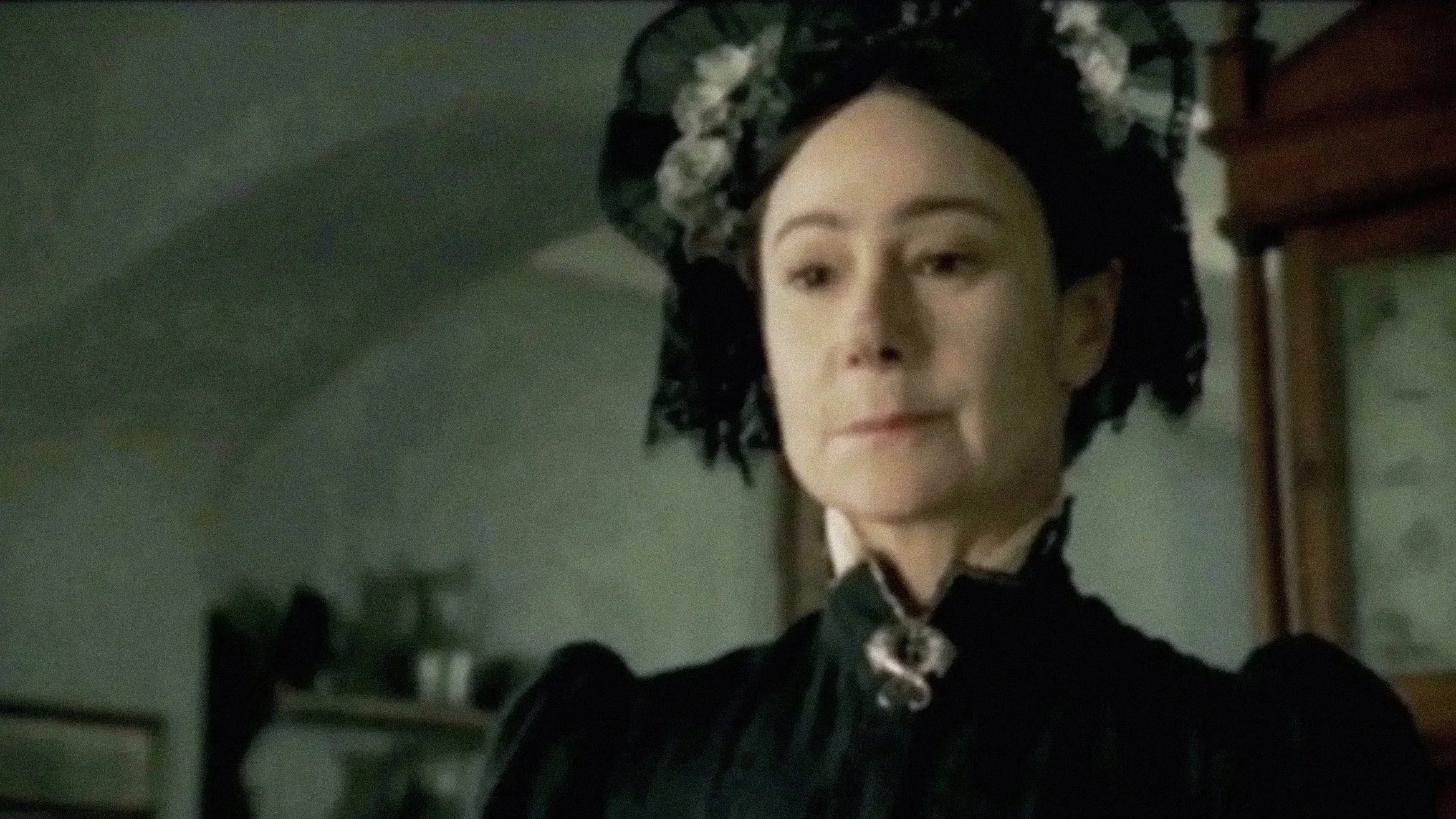
Jane Murdstone in David Copperfield is not a lovable character. She is cold, rigid, controlling, and often cruel. To reconsider her is not to defend her severity. It is to ask whether her unpleasant presence reveals something that fairy-tale comfort tends to conceal.
She represents a world of firmness, suspicion, discipline, hierarchy, and control. Much of that world is oppressive. At the same time, it is also a reminder that life is not governed by tenderness alone. Boundaries matter. Rules matter. Prudence matters. A society that teaches only sympathy, spontaneity, emotional expression, and wounded innocence may become incapable of recognizing the value of restraint.
Jane Murdstone is not admirable, but she is not meaningless.
She stands at the opposite pole of fairy-tale thinking. Fairy tales often invite us to identify with the innocent sufferer: the neglected child, the wronged daughter, the misunderstood young person, the one whose inner worth will one day be seen. Jane Murdstone rejects that entire emotional economy. She is severe precisely because she refuses to treat vulnerability as a source of authority.
That refusal can become cruel, but the opposite error can also become dangerous.
After decades of literary, cinematic, and educational training, the cultural balance of power has shifted. The “King” of modern society is no longer the stern guardian of order, but the lovable rule-breaker. The “Empress” is no longer Jane Murdstone, with her cold severity and rigid discipline, but David Copperfield, the wounded child whose pain commands sympathy and whose vulnerability claims moral authority.
This reversal has not been entirely bad. It has made society more attentive to suffering, abuse, emotional harm, and hidden forms of domination. It has allowed many people to speak after being silenced. It has challenged older systems in which authority could hide cruelty behind the language of discipline.
However, every moral vocabulary can be weaponized.
Once innocence becomes authority, people may learn to perform innocence. Once vulnerability becomes power, vulnerability can be used to silence criticism. Once self-expression becomes sacred, every boundary can be framed as oppression. Once rule-breaking is romanticized, those who ask for order may be caricatured as villains before they are even heard.
This is the fairy-tale danger in modern form: not that people believe in magic, but that they believe the world is morally arranged like a story.
They expect villains to be obvious, institutions to notice suffering, sincerity to defeat manipulation, and recognition to arrive if only they remain authentic enough. They also expect a happy ending not because reality has earned one, but because narrative has trained them to anticipate one.
In this sense, fairy tales can become a narcotic.
They do not merely soothe pain. They may reduce vigilance. They may encourage people to confuse emotional appeal with truth, victimhood with virtue, and discomfort with injustice. They may make people less willing to ask hard questions: Who benefits from this story? What facts are being omitted? What incentives are at work? What power is hiding behind sympathy? What danger is being disguised as kindness?
A mature society does not need fewer stories. It needs harder readings of stories.
We do not need to banish fairy tales. We need to stop treating them as harmless, and to recover the darker intelligence that many old tales once possessed: the knowledge that wolves may speak sweetly, houses made of candy may be traps, and rescue may not arrive in time.
Perhaps the real question is not why we need fairy tales, but what kind of fairy tales we need, and what kind of readers we must become.
If fairy tales teach vigilance, they may still serve us. If they teach only comfort, they may weaken us. If they remind us that danger can be disguised, they are useful. If they persuade us that goodness alone will save us, they are dangerous.
Though Jane Murdstone is not a model to imitate, she is a useful disturbance. She interrupts the soft dream. She reminds us that order, suspicion, discipline, and boundaries are not always the enemies of freedom. Sometimes they are what prevent freedom from being swallowed by charm.
The world may not need more cruelty, but it may need less enchantment.