
 Image 1 of 1
Certified Translation of a Last Will and Testament
This page provides certified translation services for last wills and testaments written in Chinese. A will is a legal document through which an individual expresses their intentions regarding the distribution of property and the management of personal affairs after death. Within Chinese legal and cultural practice, wills are commonly used to record how assets should be allocated among family members or other beneficiaries and may also designate individuals responsible for carrying out the instructions of the document. When such documents are presented in English-speaking jurisdictions, a certified translation may be required so that the legal meaning and the intentions expressed by the testator can be clearly understood.
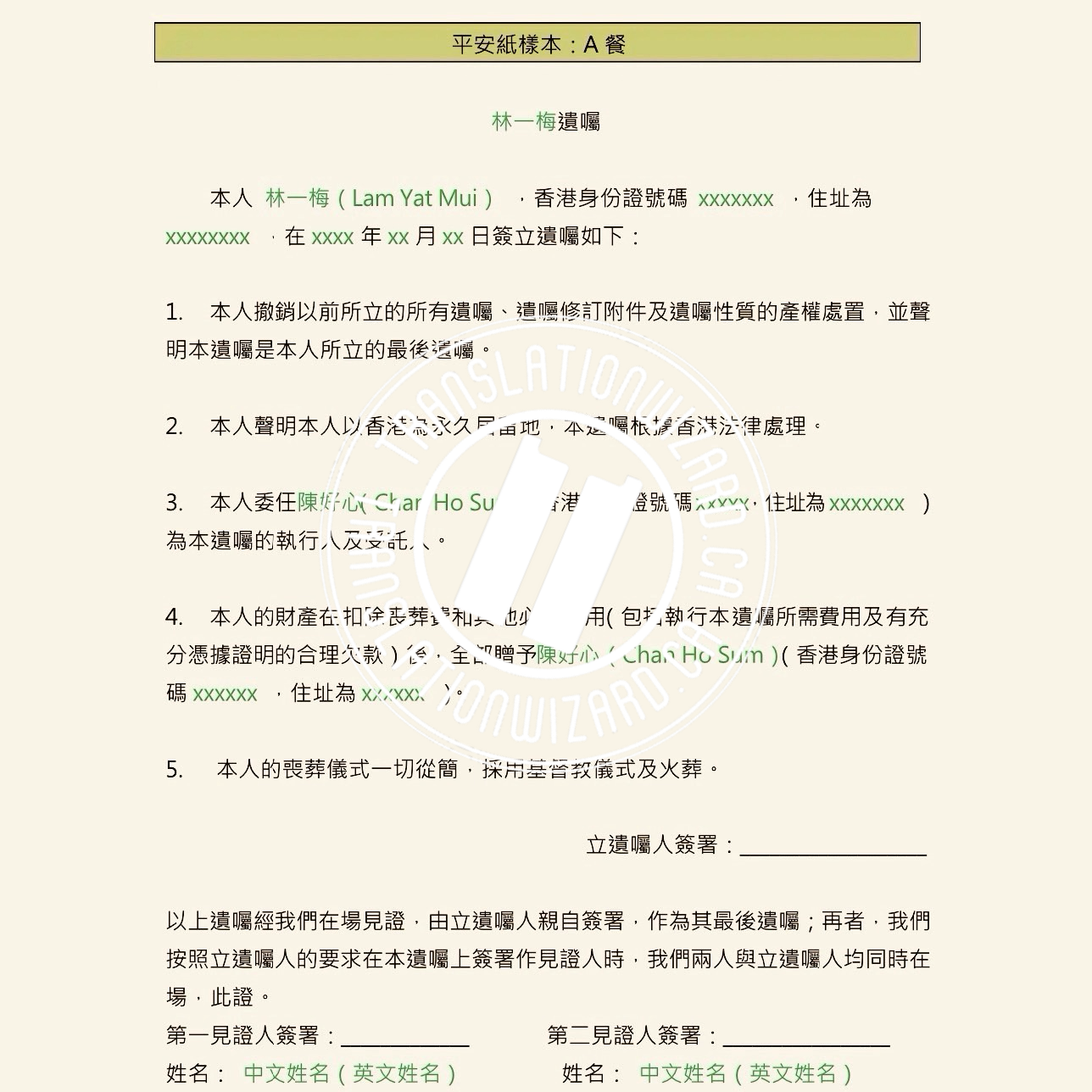
A typical Chinese-language will identifies the person making the testament and may include personal details confirming the identity of the testator. These details may include the testator’s name, identification information, and place of residence. The document normally records a declaration that the will reflects the final wishes of the testator regarding the disposition of property and related matters. This declaration forms the foundation of the testamentary document.
Another defining feature of a will is the description of the assets and interests addressed by the document. The will may refer to real property, financial assets, personal belongings, or other forms of property owned by the testator. The text generally describes how these assets are to be distributed or managed and may specify the beneficiaries who are entitled to receive them. This section establishes the central purpose of the will by outlining the intended arrangement for the testator’s estate.
Many wills also designate an executor or representative responsible for carrying out the provisions of the testament. The executor’s role may include administering the estate, managing assets during the settlement process, and ensuring that the instructions recorded in the will are fulfilled. By identifying a responsible individual, the document provides a practical mechanism through which the wishes of the testator may be implemented.
Chinese-language wills often include formal elements confirming the authenticity of the document. These elements may include signatures, witness statements, or references to certification procedures depending on the legal environment in which the will was prepared. Such features help demonstrate that the document represents the voluntary and considered intentions of the testator.
Translations associated with testamentary documents are prepared by a Chinese–English certified translator accredited by the Society of Translators and Interpreters of British Columbia (STIBC) and the Association of Translators and Interpreters of Ontario (ATIO). Certified translations help ensure that legal terminology, testamentary provisions, and institutional references appearing in the original will are accurately rendered in English while preserving the structure and meaning of the source document.
Certified Translation of a Last Will and Testament
This page provides certified translation services for last wills and testaments written in Chinese. A will is a legal document through which an individual expresses their intentions regarding the distribution of property and the management of personal affairs after death. Within Chinese legal and cultural practice, wills are commonly used to record how assets should be allocated among family members or other beneficiaries and may also designate individuals responsible for carrying out the instructions of the document. When such documents are presented in English-speaking jurisdictions, a certified translation may be required so that the legal meaning and the intentions expressed by the testator can be clearly understood.
A typical Chinese-language will identifies the person making the testament and may include personal details confirming the identity of the testator. These details may include the testator’s name, identification information, and place of residence. The document normally records a declaration that the will reflects the final wishes of the testator regarding the disposition of property and related matters. This declaration forms the foundation of the testamentary document.
Another defining feature of a will is the description of the assets and interests addressed by the document. The will may refer to real property, financial assets, personal belongings, or other forms of property owned by the testator. The text generally describes how these assets are to be distributed or managed and may specify the beneficiaries who are entitled to receive them. This section establishes the central purpose of the will by outlining the intended arrangement for the testator’s estate.
Many wills also designate an executor or representative responsible for carrying out the provisions of the testament. The executor’s role may include administering the estate, managing assets during the settlement process, and ensuring that the instructions recorded in the will are fulfilled. By identifying a responsible individual, the document provides a practical mechanism through which the wishes of the testator may be implemented.
Chinese-language wills often include formal elements confirming the authenticity of the document. These elements may include signatures, witness statements, or references to certification procedures depending on the legal environment in which the will was prepared. Such features help demonstrate that the document represents the voluntary and considered intentions of the testator.
Translations associated with testamentary documents are prepared by a Chinese–English certified translator accredited by the Society of Translators and Interpreters of British Columbia (STIBC) and the Association of Translators and Interpreters of Ontario (ATIO). Certified translations help ensure that legal terminology, testamentary provisions, and institutional references appearing in the original will are accurately rendered in English while preserving the structure and meaning of the source document.