
 Image 1 of 1
Certified Translation of an ROC Court Judgment (Verdict)
This page provides certified translation services for court judgments issued in the Republic of China (Taiwan). A court judgment is an official legal document issued by a court of law after judicial review of a case. The document records the court’s decision and explains the legal reasoning that led to the final ruling. Judgments issued by Taiwanese courts may arise from criminal, civil, or administrative proceedings and serve as formal legal records reflecting the outcome of judicial adjudication. When such documents are presented outside Taiwan, an accurate English translation may be required so that the legal findings and institutional context of the judgment can be properly understood by institutions operating in English-language environments.
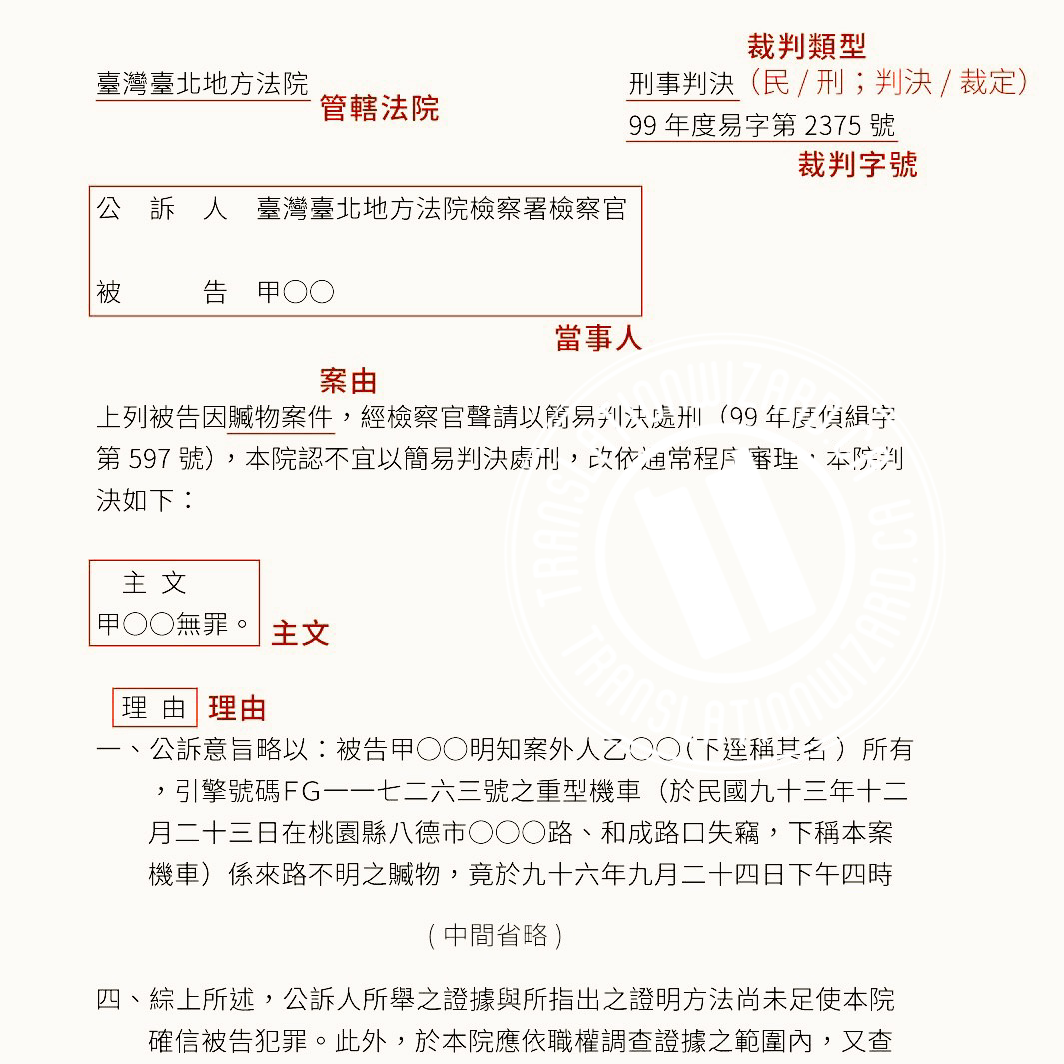
A typical ROC court judgment contains structured sections reflecting the procedural framework of Taiwan’s judicial system. The document often begins with identifying information relating to the court and the case, including the name of the court, the type of proceeding, and the official case number assigned within the judicial record system. These elements establish the procedural identity of the case and indicate the court responsible for the adjudication.
Another characteristic feature of Taiwanese judgments is the presentation of the parties involved in the case. The document may identify the prosecuting authority, the defendant, or other relevant parties depending on the nature of the proceedings. These sections clarify the roles of the participants within the legal process and provide the contextual framework through which the court examined the case.
The judgment text itself commonly includes a formal statement of the court’s decision followed by the reasoning supporting that decision. The reasoning section may summarize the allegations, discuss the evidence presented during the proceedings, and analyze the legal standards applied by the court. Through this structure, the document records the logical and legal basis upon which the court reached its conclusion. Such reasoning forms an integral part of the written judgment within Taiwan’s judicial tradition.
ROC court judgments are official legal documents issued by the judiciary and may contain institutional markings identifying the court responsible for the decision. The document may include formal headings, case references, and other administrative identifiers reflecting Taiwan’s court documentation practices. These elements help establish the authenticity and institutional origin of the judgment as part of the judicial record system.
Translations associated with court judgments and legal decisions are prepared by a Chinese–English certified translator accredited by the Society of Translators and Interpreters of British Columbia (STIBC) and the Association of Translators and Interpreters of Ontario (ATIO). Certified translations help ensure that legal terminology, procedural references, and institutional language appearing in the original judgment are accurately rendered in English while preserving the structure and meaning of the source document.
Certified Translation of an ROC Court Judgment (Verdict)
This page provides certified translation services for court judgments issued in the Republic of China (Taiwan). A court judgment is an official legal document issued by a court of law after judicial review of a case. The document records the court’s decision and explains the legal reasoning that led to the final ruling. Judgments issued by Taiwanese courts may arise from criminal, civil, or administrative proceedings and serve as formal legal records reflecting the outcome of judicial adjudication. When such documents are presented outside Taiwan, an accurate English translation may be required so that the legal findings and institutional context of the judgment can be properly understood by institutions operating in English-language environments.
A typical ROC court judgment contains structured sections reflecting the procedural framework of Taiwan’s judicial system. The document often begins with identifying information relating to the court and the case, including the name of the court, the type of proceeding, and the official case number assigned within the judicial record system. These elements establish the procedural identity of the case and indicate the court responsible for the adjudication.
Another characteristic feature of Taiwanese judgments is the presentation of the parties involved in the case. The document may identify the prosecuting authority, the defendant, or other relevant parties depending on the nature of the proceedings. These sections clarify the roles of the participants within the legal process and provide the contextual framework through which the court examined the case.
The judgment text itself commonly includes a formal statement of the court’s decision followed by the reasoning supporting that decision. The reasoning section may summarize the allegations, discuss the evidence presented during the proceedings, and analyze the legal standards applied by the court. Through this structure, the document records the logical and legal basis upon which the court reached its conclusion. Such reasoning forms an integral part of the written judgment within Taiwan’s judicial tradition.
ROC court judgments are official legal documents issued by the judiciary and may contain institutional markings identifying the court responsible for the decision. The document may include formal headings, case references, and other administrative identifiers reflecting Taiwan’s court documentation practices. These elements help establish the authenticity and institutional origin of the judgment as part of the judicial record system.
Translations associated with court judgments and legal decisions are prepared by a Chinese–English certified translator accredited by the Society of Translators and Interpreters of British Columbia (STIBC) and the Association of Translators and Interpreters of Ontario (ATIO). Certified translations help ensure that legal terminology, procedural references, and institutional language appearing in the original judgment are accurately rendered in English while preserving the structure and meaning of the source document.