
 Image 1 of 1
Certified Translation of a Settlement Agreement
This page provides certified translation services for settlement agreements written in Chinese. A settlement agreement is a legal document through which two or more parties resolve a dispute by mutual consent without further litigation. Within Chinese legal practice, such agreements are commonly used to formalize the resolution of civil disputes, including matters relating to personal injury, property damage, financial claims, contractual disagreements, or other private disputes between individuals or entities. When these documents are presented in English-speaking jurisdictions, a certified translation may be required so that the terms of the agreement and the legal intention expressed by the parties can be clearly understood.
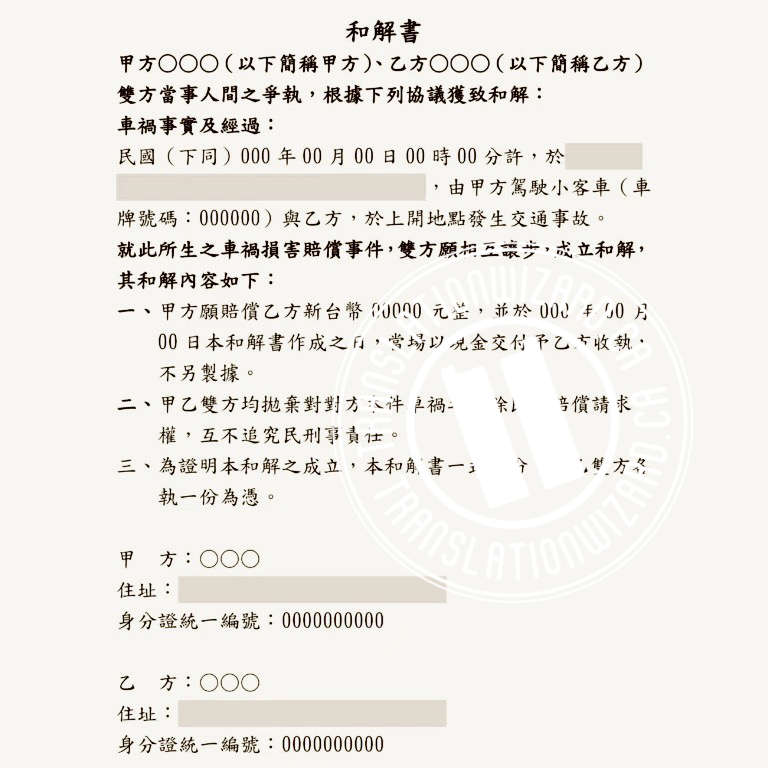
A typical Chinese-language settlement agreement begins by identifying the parties involved in the dispute. The document may specify the names of the parties and may include identifying details such as addresses or identification numbers. These elements establish the identity of the individuals or entities participating in the agreement and provide a clear legal reference for the obligations described in the document.
Another defining feature of settlement agreements is the description of the factual background that led to the dispute. The document may briefly outline the circumstances of the incident or disagreement and provide a contextual explanation of the events that prompted the parties to negotiate a settlement. This section helps clarify the origin of the dispute and forms the basis upon which the subsequent terms of the agreement are structured.
The core portion of the settlement agreement typically sets out the terms agreed upon by the parties. These terms may include compensation arrangements, financial payments, or other conditions that both parties accept in order to resolve the dispute. The document often states that, upon fulfillment of the agreed conditions, the parties will not pursue further claims relating to the matter in question. This clause reflects the essential purpose of a settlement agreement: to bring final resolution to a dispute through mutual agreement.
Settlement agreements are often signed by the parties involved and may contain signatures, identification references, or other confirming elements establishing that the document reflects the voluntary agreement of the participants. These features help demonstrate that the agreement was concluded by the parties themselves and that the terms recorded in the document represent their mutual understanding.
Translations associated with legal agreements are prepared by a Chinese–English certified translator accredited by the Society of Translators and Interpreters of British Columbia (STIBC) and the Association of Translators and Interpreters of Ontario (ATIO). Certified translations help ensure that legal terminology, contractual language, and institutional references appearing in the original agreement are accurately rendered in English while preserving the structure and meaning of the source document.
Certified Translation of a Settlement Agreement
This page provides certified translation services for settlement agreements written in Chinese. A settlement agreement is a legal document through which two or more parties resolve a dispute by mutual consent without further litigation. Within Chinese legal practice, such agreements are commonly used to formalize the resolution of civil disputes, including matters relating to personal injury, property damage, financial claims, contractual disagreements, or other private disputes between individuals or entities. When these documents are presented in English-speaking jurisdictions, a certified translation may be required so that the terms of the agreement and the legal intention expressed by the parties can be clearly understood.
A typical Chinese-language settlement agreement begins by identifying the parties involved in the dispute. The document may specify the names of the parties and may include identifying details such as addresses or identification numbers. These elements establish the identity of the individuals or entities participating in the agreement and provide a clear legal reference for the obligations described in the document.
Another defining feature of settlement agreements is the description of the factual background that led to the dispute. The document may briefly outline the circumstances of the incident or disagreement and provide a contextual explanation of the events that prompted the parties to negotiate a settlement. This section helps clarify the origin of the dispute and forms the basis upon which the subsequent terms of the agreement are structured.
The core portion of the settlement agreement typically sets out the terms agreed upon by the parties. These terms may include compensation arrangements, financial payments, or other conditions that both parties accept in order to resolve the dispute. The document often states that, upon fulfillment of the agreed conditions, the parties will not pursue further claims relating to the matter in question. This clause reflects the essential purpose of a settlement agreement: to bring final resolution to a dispute through mutual agreement.
Settlement agreements are often signed by the parties involved and may contain signatures, identification references, or other confirming elements establishing that the document reflects the voluntary agreement of the participants. These features help demonstrate that the agreement was concluded by the parties themselves and that the terms recorded in the document represent their mutual understanding.
Translations associated with legal agreements are prepared by a Chinese–English certified translator accredited by the Society of Translators and Interpreters of British Columbia (STIBC) and the Association of Translators and Interpreters of Ontario (ATIO). Certified translations help ensure that legal terminology, contractual language, and institutional references appearing in the original agreement are accurately rendered in English while preserving the structure and meaning of the source document.