
 Image 1 of 1
Certified Translation of a Taiwan ROC Marriage Contract
This page provides certified translation services for marriage contracts issued in the Republic of China (Taiwan). A marriage contract, often referred to as a marriage agreement or marriage certificate document in Taiwan’s legal context, records the mutual consent of two individuals to enter into marriage and reflects the legal framework governing marital registration under the Civil Code of the Republic of China. The document typically records the essential personal information of the spouses and affirms that the marriage has been concluded according to the legal requirements applicable within Taiwan’s civil registration system. When such documents are presented outside Chinese-speaking jurisdictions, a certified English translation may be required so that the legal information contained in the document can be accurately understood by institutions operating in English-language environments.
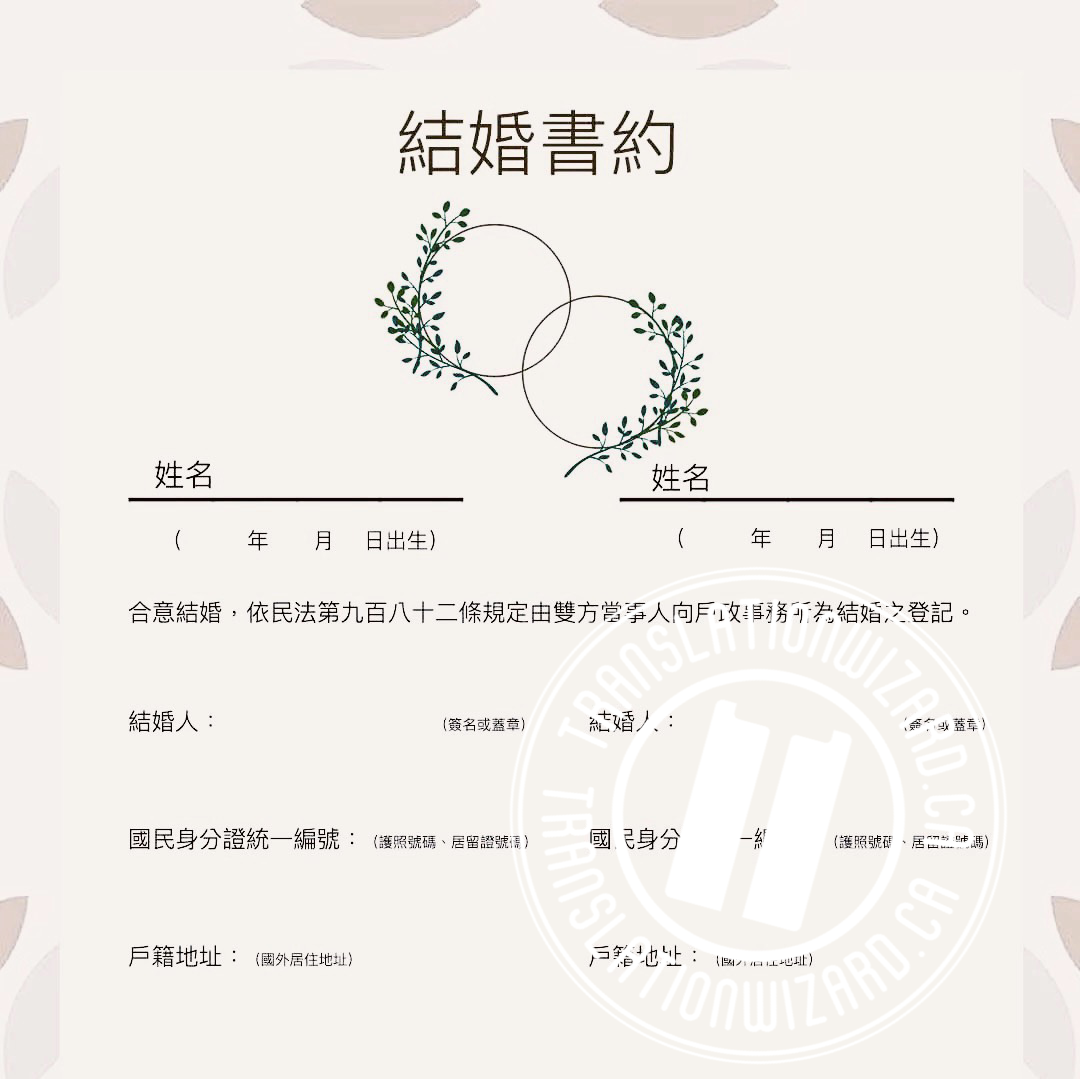
Marriage contracts in Taiwan commonly appear as formal written documents signed by the spouses and may include references to the relevant provisions of the Civil Code governing marriage. The document typically records the names of the parties to the marriage, their dates of birth, and identifying information such as national identification numbers. These elements establish the identity of the spouses and link the document to the civil registration system maintained by the household registration authorities.
A distinctive feature of many ROC marriage contracts is the emphasis on mutual consent between the spouses. The document usually contains a statement confirming that both parties voluntarily agree to enter into marriage in accordance with the applicable legal provisions. This statement reflects the legal principle that marriage under Taiwanese law is based on the expressed consent of the parties rather than solely on ceremonial or religious recognition.
Marriage contracts may also contain additional identifying details relating to the spouses, including household registration addresses or other administrative information used within Taiwan’s population registration system. Because these documents combine legal language with personal identification information, translating them requires careful attention to legal terminology, personal data fields, and the formal wording used in civil documentation. Preserving the structure and tone of the original document helps ensure that the translated version accurately reflects the legal character of the original record.
Translations associated with civil and legal documentation are prepared by a Chinese–English certified translator accredited by the Society of Translators and Interpreters of British Columbia (STIBC) and the Association of Translators and Interpreters of Ontario (ATIO). Certified translations help ensure that personal identification details, legal statements, and institutional references appearing in the original marriage contract are accurately rendered in English while preserving the informational structure of the official document.
Certified Translation of a Taiwan ROC Marriage Contract
This page provides certified translation services for marriage contracts issued in the Republic of China (Taiwan). A marriage contract, often referred to as a marriage agreement or marriage certificate document in Taiwan’s legal context, records the mutual consent of two individuals to enter into marriage and reflects the legal framework governing marital registration under the Civil Code of the Republic of China. The document typically records the essential personal information of the spouses and affirms that the marriage has been concluded according to the legal requirements applicable within Taiwan’s civil registration system. When such documents are presented outside Chinese-speaking jurisdictions, a certified English translation may be required so that the legal information contained in the document can be accurately understood by institutions operating in English-language environments.
Marriage contracts in Taiwan commonly appear as formal written documents signed by the spouses and may include references to the relevant provisions of the Civil Code governing marriage. The document typically records the names of the parties to the marriage, their dates of birth, and identifying information such as national identification numbers. These elements establish the identity of the spouses and link the document to the civil registration system maintained by the household registration authorities.
A distinctive feature of many ROC marriage contracts is the emphasis on mutual consent between the spouses. The document usually contains a statement confirming that both parties voluntarily agree to enter into marriage in accordance with the applicable legal provisions. This statement reflects the legal principle that marriage under Taiwanese law is based on the expressed consent of the parties rather than solely on ceremonial or religious recognition.
Marriage contracts may also contain additional identifying details relating to the spouses, including household registration addresses or other administrative information used within Taiwan’s population registration system. Because these documents combine legal language with personal identification information, translating them requires careful attention to legal terminology, personal data fields, and the formal wording used in civil documentation. Preserving the structure and tone of the original document helps ensure that the translated version accurately reflects the legal character of the original record.
Translations associated with civil and legal documentation are prepared by a Chinese–English certified translator accredited by the Society of Translators and Interpreters of British Columbia (STIBC) and the Association of Translators and Interpreters of Ontario (ATIO). Certified translations help ensure that personal identification details, legal statements, and institutional references appearing in the original marriage contract are accurately rendered in English while preserving the informational structure of the official document.