
 Image 1 of 1
Certified Translation of a PRC Employment and Income Statement
This page provides certified translation services for Employment and Income Statements issued in the People’s Republic of China. In mainland China, an employment and income statement is commonly issued by an employer or work unit to confirm a person’s professional status and income level. Such documents are often prepared by a company’s human resources department or administrative office and may be used to verify employment history, professional position, and salary information recorded within the organization. When these certificates are presented outside mainland China, an accurate English translation may be required so that the content of the document can be clearly understood by institutions operating in English-language environments.
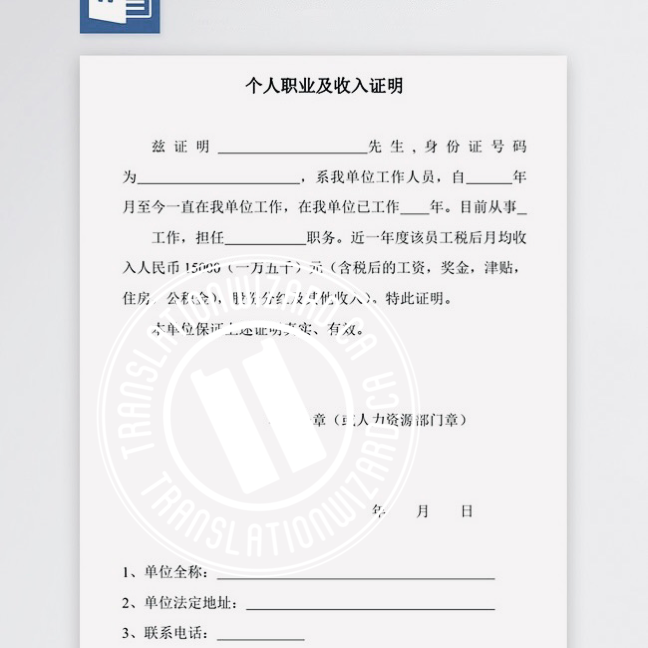
A typical PRC employment and income statement contains several categories of information relating to the employee and the issuing organization. The document may identify the employee by name and personal identification number, followed by confirmation of their employment status within the organization. It may also indicate the period during which the employee has worked for the company and the professional position or duties associated with the individual’s role. These details help establish the individual’s professional identity within the institutional structure of the employer.
Another characteristic element of these certificates is the description of income information associated with the employee. The statement may refer to salary or average monthly income over a specified period and may indicate whether the amount reflects income after applicable deductions or taxes. Some documents also reference additional forms of compensation that may be included in the income figure, such as bonuses, allowances, or housing-related contributions. The purpose of this information is to present a general representation of the employee’s income as recognized by the issuing organization.
PRC employment and income statements are typically issued on official company letterhead and may contain an institutional seal, signature, or departmental stamp verifying the authenticity of the certificate. In many cases, the document also includes the full name and address of the employer, as well as contact information for the issuing department. These elements serve to identify the issuing organization and confirm that the information recorded in the certificate originates from the employer responsible for the employee’s records.
Translations associated with employment and income documentation are prepared by a Chinese–English certified translator accredited by the Society of Translators and Interpreters of British Columbia (STIBC) and the Association of Translators and Interpreters of Ontario (ATIO). Certified translations help ensure that employment information, income references, and institutional terminology appearing in the original certificate are accurately rendered in English while preserving the informational structure and meaning of the source document.
Certified Translation of a PRC Employment and Income Statement
This page provides certified translation services for Employment and Income Statements issued in the People’s Republic of China. In mainland China, an employment and income statement is commonly issued by an employer or work unit to confirm a person’s professional status and income level. Such documents are often prepared by a company’s human resources department or administrative office and may be used to verify employment history, professional position, and salary information recorded within the organization. When these certificates are presented outside mainland China, an accurate English translation may be required so that the content of the document can be clearly understood by institutions operating in English-language environments.
A typical PRC employment and income statement contains several categories of information relating to the employee and the issuing organization. The document may identify the employee by name and personal identification number, followed by confirmation of their employment status within the organization. It may also indicate the period during which the employee has worked for the company and the professional position or duties associated with the individual’s role. These details help establish the individual’s professional identity within the institutional structure of the employer.
Another characteristic element of these certificates is the description of income information associated with the employee. The statement may refer to salary or average monthly income over a specified period and may indicate whether the amount reflects income after applicable deductions or taxes. Some documents also reference additional forms of compensation that may be included in the income figure, such as bonuses, allowances, or housing-related contributions. The purpose of this information is to present a general representation of the employee’s income as recognized by the issuing organization.
PRC employment and income statements are typically issued on official company letterhead and may contain an institutional seal, signature, or departmental stamp verifying the authenticity of the certificate. In many cases, the document also includes the full name and address of the employer, as well as contact information for the issuing department. These elements serve to identify the issuing organization and confirm that the information recorded in the certificate originates from the employer responsible for the employee’s records.
Translations associated with employment and income documentation are prepared by a Chinese–English certified translator accredited by the Society of Translators and Interpreters of British Columbia (STIBC) and the Association of Translators and Interpreters of Ontario (ATIO). Certified translations help ensure that employment information, income references, and institutional terminology appearing in the original certificate are accurately rendered in English while preserving the informational structure and meaning of the source document.