
 Image 1 of 1
Certified Translation of a Pay Stub or Salary Statement
This page provides certified translation services for pay stubs, salary statements, and payroll records originally issued in Chinese. A pay stub is an employment-related financial document that summarizes the wages paid to an employee for a specific pay period. Because these documents often contain structured payroll information, tax-related entries, and employment identifiers, an accurate English translation may be required when the document is submitted to institutions operating in a different language environment.
A typical pay stub records the employee’s identifying information together with a detailed breakdown of wages and deductions for a particular payroll period. The document may include the employee’s name, the employer or issuing organization, the payroll date, and the time period covered by the payment. In addition to the base salary or wage, the pay stub may present categories such as bonuses, allowances, overtime payments, or reimbursements depending on the employment arrangement. Many payroll records also display statutory deductions, social insurance contributions, or tax-related amounts that form part of the employee’s compensation record.
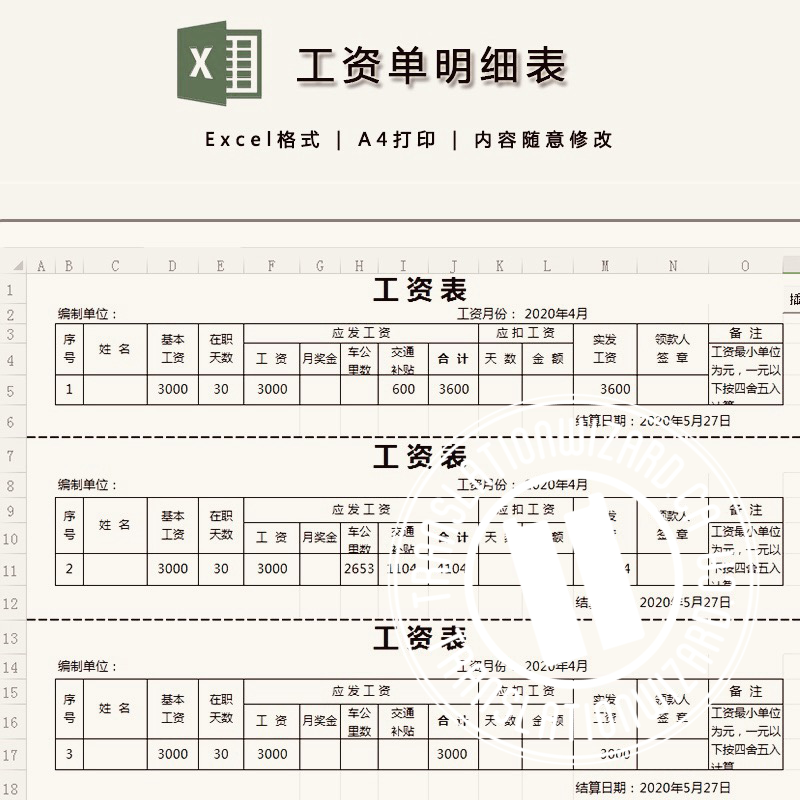
Payroll statements produced in Chinese-speaking administrative systems frequently follow tabular accounting formats designed to present salary calculations clearly. Columns may list categories such as base wage, working days, allowances, deductions, and the final amount paid to the employee. Some payroll documents may also contain internal accounting references, payroll batch identifiers, or signatures confirming the issuance of the wage record. Because payroll terminology and employment compensation structures can vary between jurisdictions, careful translation is required to ensure that each salary category and deduction entry remains understandable to readers unfamiliar with the original payroll system.
In international administrative contexts, translated pay stubs may serve as supporting documentation in employment verification, financial applications, immigration procedures, or other institutional reviews requiring evidence of income history. Organizations reviewing such documents rely on accurate translations to interpret the salary information recorded in the original payroll document. Preserving the tabular structure of the pay stub — including wage categories, deductions, and totals — helps ensure that the translated version faithfully represents the financial and employment information contained in the original record.
Translations associated with employment and financial documentation are prepared by a Chinese–English certified translator accredited by the Society of Translators and Interpreters of British Columbia (STIBC) and the Association of Translators and Interpreters of Ontario (ATIO). Certified translations help ensure that payroll terminology, salary classifications, and employment references are conveyed clearly in English while preserving the structure and informational integrity of the original pay stub.
Certified Translation of a Pay Stub or Salary Statement
This page provides certified translation services for pay stubs, salary statements, and payroll records originally issued in Chinese. A pay stub is an employment-related financial document that summarizes the wages paid to an employee for a specific pay period. Because these documents often contain structured payroll information, tax-related entries, and employment identifiers, an accurate English translation may be required when the document is submitted to institutions operating in a different language environment.
A typical pay stub records the employee’s identifying information together with a detailed breakdown of wages and deductions for a particular payroll period. The document may include the employee’s name, the employer or issuing organization, the payroll date, and the time period covered by the payment. In addition to the base salary or wage, the pay stub may present categories such as bonuses, allowances, overtime payments, or reimbursements depending on the employment arrangement. Many payroll records also display statutory deductions, social insurance contributions, or tax-related amounts that form part of the employee’s compensation record.
Payroll statements produced in Chinese-speaking administrative systems frequently follow tabular accounting formats designed to present salary calculations clearly. Columns may list categories such as base wage, working days, allowances, deductions, and the final amount paid to the employee. Some payroll documents may also contain internal accounting references, payroll batch identifiers, or signatures confirming the issuance of the wage record. Because payroll terminology and employment compensation structures can vary between jurisdictions, careful translation is required to ensure that each salary category and deduction entry remains understandable to readers unfamiliar with the original payroll system.
In international administrative contexts, translated pay stubs may serve as supporting documentation in employment verification, financial applications, immigration procedures, or other institutional reviews requiring evidence of income history. Organizations reviewing such documents rely on accurate translations to interpret the salary information recorded in the original payroll document. Preserving the tabular structure of the pay stub — including wage categories, deductions, and totals — helps ensure that the translated version faithfully represents the financial and employment information contained in the original record.
Translations associated with employment and financial documentation are prepared by a Chinese–English certified translator accredited by the Society of Translators and Interpreters of British Columbia (STIBC) and the Association of Translators and Interpreters of Ontario (ATIO). Certified translations help ensure that payroll terminology, salary classifications, and employment references are conveyed clearly in English while preserving the structure and informational integrity of the original pay stub.