
 Image 1 of 1
Certified Translation of a PRC Occupational Qualification Certificate
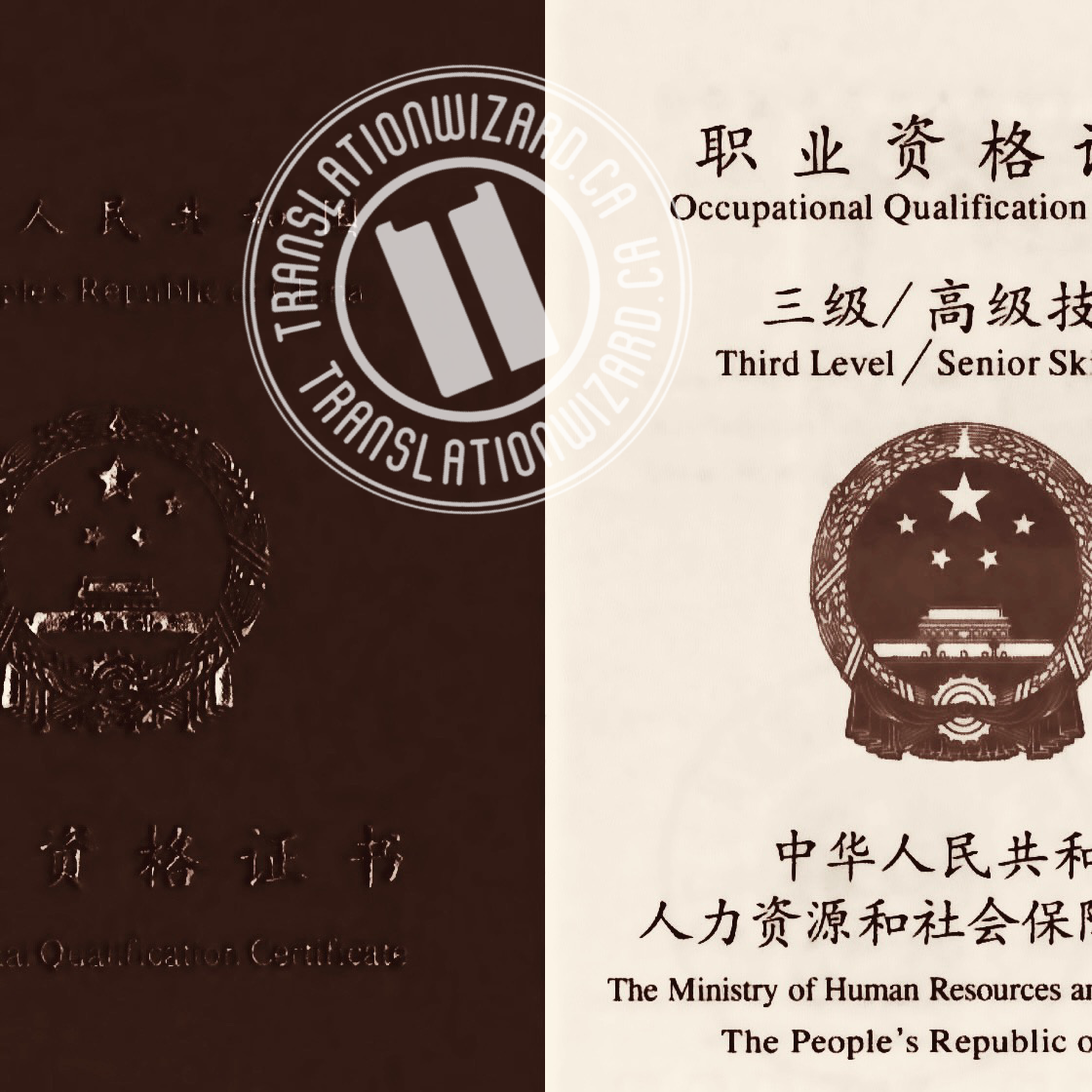
This page provides certified translation services for occupational qualification certificates issued in the People’s Republic of China. These certificates document an individual’s professional skill classification within a nationally recognized occupational standards system. In China, occupational qualifications are issued through government-authorized assessment frameworks designed to evaluate vocational competence in specific trades or professions. When these certificates are presented to institutions outside the original Chinese administrative environment, an accurate English translation may be required to clarify the credential and the classification recorded in the original document.
A PRC occupational qualification certificate typically records the holder’s name, the category of occupation, and the level of skill officially recognized by the issuing authority. The certificate may also include the certificate number, the name of the certifying institution, and the date on which the qualification was granted. In many cases the document bears official seals or administrative marks associated with national or provincial human resources authorities responsible for vocational certification. These structural elements confirm that the certificate forms part of the formal occupational credentialing framework used within mainland China.
China’s occupational qualification system historically categorized vocational credentials according to graded skill levels. Documents may refer to classifications such as junior, intermediate, senior, technician, or senior technician levels depending on the profession and the regulatory framework in force at the time of issuance. Such classifications reflect the administrative language used in the national skills evaluation system and are often tied to vocational training programs, professional examinations, or competency assessments recognized by government authorities. Translating these terms requires careful attention to the terminology used in both Chinese administrative practice and English descriptions of professional credentials.
Occupational qualification certificates are often presented internationally as supporting evidence of professional training, vocational competence, or technical certification. Institutions reviewing these documents rely on accurate translations to understand the credential recorded in the original certificate. Maintaining the structural layout of the certificate, including official titles, seals, and classification terminology, helps preserve the documentary integrity of the credential when it is reviewed in an English-language administrative or institutional setting.
Translations associated with professional credentials and regulatory documents are prepared by a Chinese–English certified translator accredited by the Society of Translators and Interpreters of British Columbia (STIBC) and the Association of Translators and Interpreters of Ontario (ATIO). Certified translations help ensure that institutional terminology, credential classifications, and administrative designations appearing on the original certificate are conveyed clearly in English while preserving the informational structure of the official document.
Certified Translation of a PRC Occupational Qualification Certificate
This page provides certified translation services for occupational qualification certificates issued in the People’s Republic of China. These certificates document an individual’s professional skill classification within a nationally recognized occupational standards system. In China, occupational qualifications are issued through government-authorized assessment frameworks designed to evaluate vocational competence in specific trades or professions. When these certificates are presented to institutions outside the original Chinese administrative environment, an accurate English translation may be required to clarify the credential and the classification recorded in the original document.
A PRC occupational qualification certificate typically records the holder’s name, the category of occupation, and the level of skill officially recognized by the issuing authority. The certificate may also include the certificate number, the name of the certifying institution, and the date on which the qualification was granted. In many cases the document bears official seals or administrative marks associated with national or provincial human resources authorities responsible for vocational certification. These structural elements confirm that the certificate forms part of the formal occupational credentialing framework used within mainland China.
China’s occupational qualification system historically categorized vocational credentials according to graded skill levels. Documents may refer to classifications such as junior, intermediate, senior, technician, or senior technician levels depending on the profession and the regulatory framework in force at the time of issuance. Such classifications reflect the administrative language used in the national skills evaluation system and are often tied to vocational training programs, professional examinations, or competency assessments recognized by government authorities. Translating these terms requires careful attention to the terminology used in both Chinese administrative practice and English descriptions of professional credentials.
Occupational qualification certificates are often presented internationally as supporting evidence of professional training, vocational competence, or technical certification. Institutions reviewing these documents rely on accurate translations to understand the credential recorded in the original certificate. Maintaining the structural layout of the certificate, including official titles, seals, and classification terminology, helps preserve the documentary integrity of the credential when it is reviewed in an English-language administrative or institutional setting.
Translations associated with professional credentials and regulatory documents are prepared by a Chinese–English certified translator accredited by the Society of Translators and Interpreters of British Columbia (STIBC) and the Association of Translators and Interpreters of Ontario (ATIO). Certified translations help ensure that institutional terminology, credential classifications, and administrative designations appearing on the original certificate are conveyed clearly in English while preserving the informational structure of the official document.