
 Image 1 of 1
Certified Translation of an Antique Chinese Marriage Certificate
This page provides certified translation services for antique or historical Chinese marriage certificates. Such certificates were commonly issued in earlier periods of modern Chinese history and may originate from various administrative or cultural contexts, including the late Qing dynasty, the Republican era, or early twentieth-century local registration systems. Unlike contemporary marriage certificates issued by standardized civil registration authorities, antique marriage certificates often reflect the legal customs, ceremonial traditions, and document formats of their historical period. When these historical documents are presented outside Chinese-speaking jurisdictions, a certified English translation may be required so that the information contained in the document can be accurately understood in modern legal or administrative contexts.
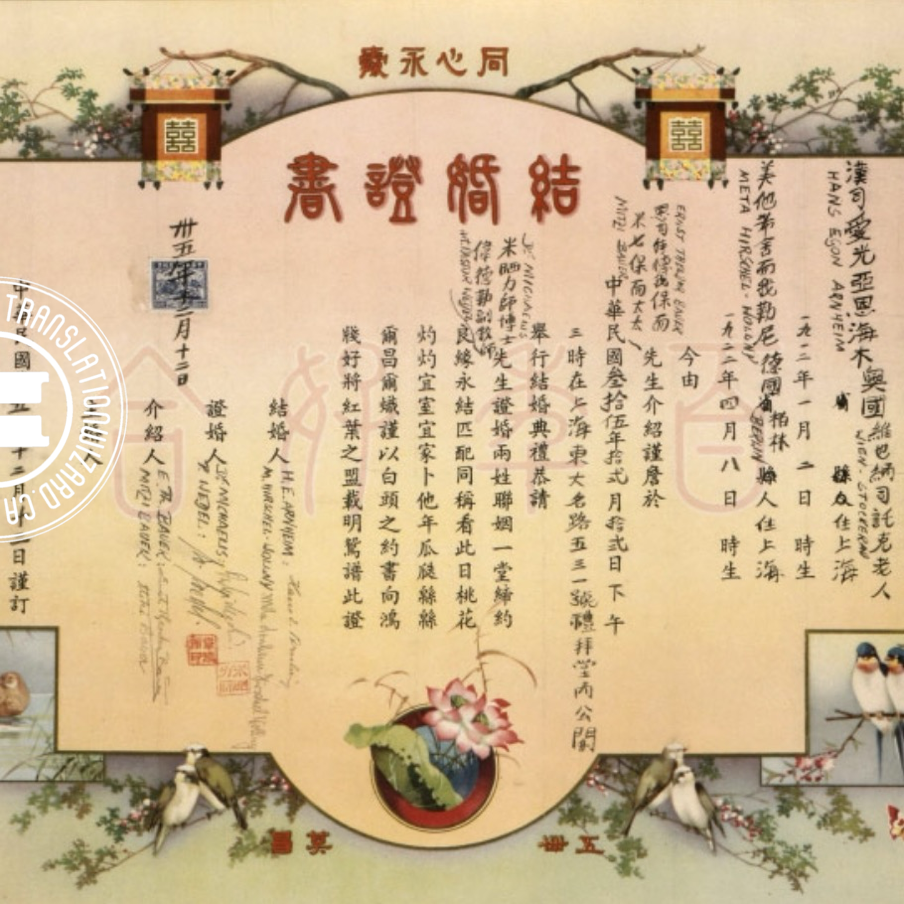
Antique marriage certificates frequently contain a mixture of formal written text and decorative elements. Many examples are presented in a large ornamental format and incorporate traditional motifs symbolizing marital harmony and prosperity. These decorative elements may include auspicious characters, floral imagery, or symbolic illustrations associated with traditional Chinese wedding customs. The layout of such documents may differ significantly from modern administrative forms, often featuring vertical text columns, calligraphic writing styles, or classical literary expressions reflecting the cultural context in which the certificate was issued.
The textual content of antique marriage certificates generally records the names of the spouses, their places of origin or family background, and the date on which the marriage ceremony or registration occurred. Some documents also contain references to witnesses, intermediaries, or community authorities involved in confirming the marriage. Because historical marriage certificates were sometimes issued in ceremonial contexts rather than strictly administrative ones, the language used in these documents may contain traditional phrases or classical Chinese expressions that differ from modern legal terminology.
Another feature of historical marriage certificates is the presence of seals, handwritten signatures, or other traditional marks of authentication. These may include personal seals, community stamps, or decorative imprints associated with the issuing authority or the families involved. The combination of calligraphic text, traditional seals, and ornamental layout makes each historical marriage certificate a unique document reflecting both legal recognition and cultural tradition. Translating such documents requires careful attention not only to the literal meaning of the text but also to the historical style and terminology used in the original document.
Translations associated with historical and civil documentation are prepared by a Chinese–English certified translator accredited by the Society of Translators and Interpreters of British Columbia (STIBC) and the Association of Translators and Interpreters of Ontario (ATIO). Certified translations help ensure that personal names, historical terminology, and contextual details appearing in the original marriage certificate are accurately conveyed in English while preserving the informational structure of the document.
Certified Translation of an Antique Chinese Marriage Certificate
This page provides certified translation services for antique or historical Chinese marriage certificates. Such certificates were commonly issued in earlier periods of modern Chinese history and may originate from various administrative or cultural contexts, including the late Qing dynasty, the Republican era, or early twentieth-century local registration systems. Unlike contemporary marriage certificates issued by standardized civil registration authorities, antique marriage certificates often reflect the legal customs, ceremonial traditions, and document formats of their historical period. When these historical documents are presented outside Chinese-speaking jurisdictions, a certified English translation may be required so that the information contained in the document can be accurately understood in modern legal or administrative contexts.
Antique marriage certificates frequently contain a mixture of formal written text and decorative elements. Many examples are presented in a large ornamental format and incorporate traditional motifs symbolizing marital harmony and prosperity. These decorative elements may include auspicious characters, floral imagery, or symbolic illustrations associated with traditional Chinese wedding customs. The layout of such documents may differ significantly from modern administrative forms, often featuring vertical text columns, calligraphic writing styles, or classical literary expressions reflecting the cultural context in which the certificate was issued.
The textual content of antique marriage certificates generally records the names of the spouses, their places of origin or family background, and the date on which the marriage ceremony or registration occurred. Some documents also contain references to witnesses, intermediaries, or community authorities involved in confirming the marriage. Because historical marriage certificates were sometimes issued in ceremonial contexts rather than strictly administrative ones, the language used in these documents may contain traditional phrases or classical Chinese expressions that differ from modern legal terminology.
Another feature of historical marriage certificates is the presence of seals, handwritten signatures, or other traditional marks of authentication. These may include personal seals, community stamps, or decorative imprints associated with the issuing authority or the families involved. The combination of calligraphic text, traditional seals, and ornamental layout makes each historical marriage certificate a unique document reflecting both legal recognition and cultural tradition. Translating such documents requires careful attention not only to the literal meaning of the text but also to the historical style and terminology used in the original document.
Translations associated with historical and civil documentation are prepared by a Chinese–English certified translator accredited by the Society of Translators and Interpreters of British Columbia (STIBC) and the Association of Translators and Interpreters of Ontario (ATIO). Certified translations help ensure that personal names, historical terminology, and contextual details appearing in the original marriage certificate are accurately conveyed in English while preserving the informational structure of the document.