
 Image 1 of 1
Certified Translation of an Antique Degree or Historical Graduation Certificate
This page provides certified translation services for antique degrees and historical graduation certificates issued in earlier educational systems. Such documents often originate from schools, academies, or colonial-era institutions and may contain a combination of languages, calligraphic scripts, and traditional formatting. Because the terminology and layout of these documents can differ significantly from modern academic certificates, a careful and historically aware translation is often required when they are presented to contemporary institutions or administrative authorities.
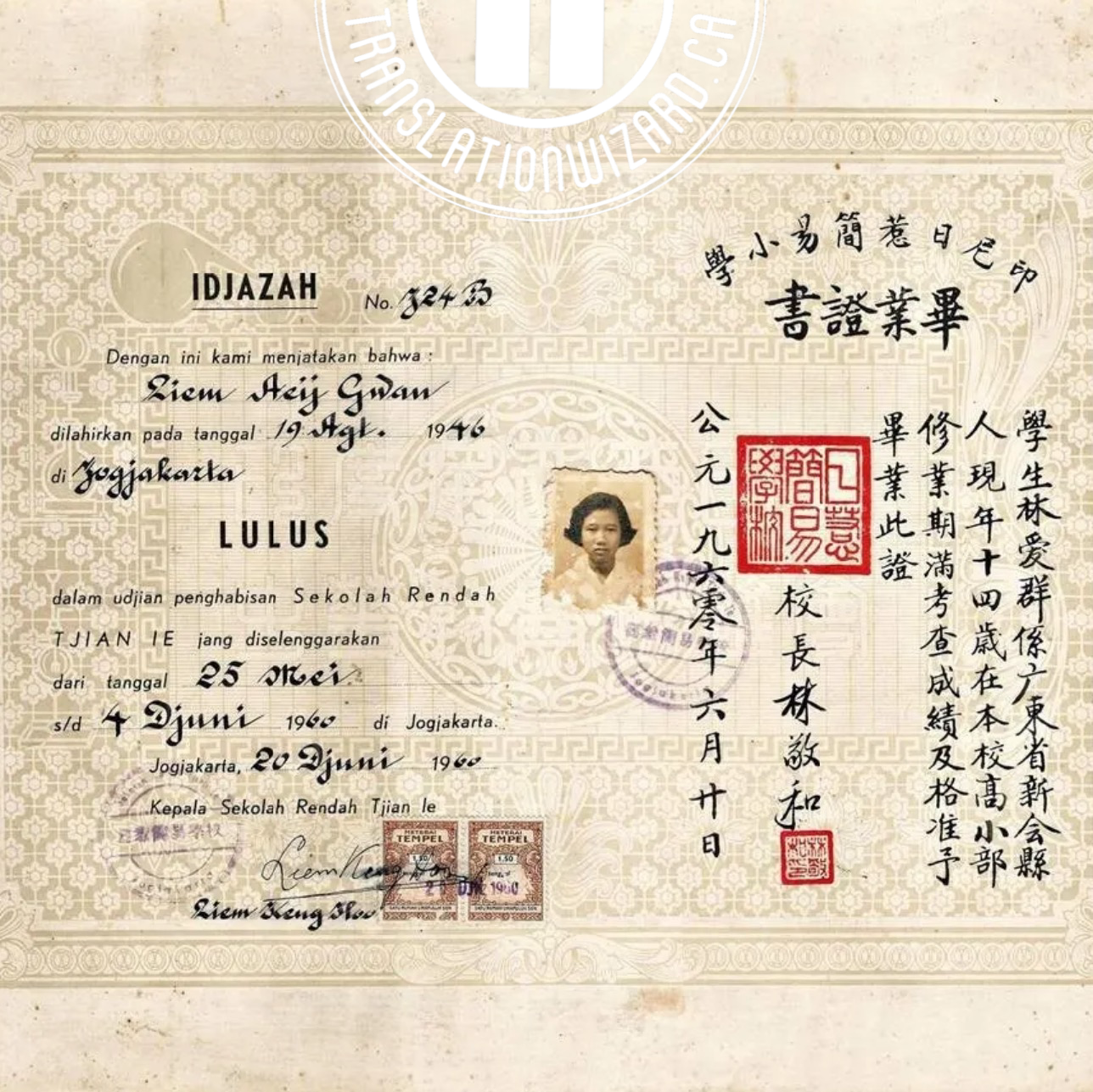
Antique graduation certificates typically record the completion of a course of study together with the identity of the student, the issuing school, and the date of graduation. Many historical certificates also include seals, handwritten annotations, official stamps, or decorative elements that reflect the administrative practices of the period in which the document was issued. In some regions, particularly in East and Southeast Asia, educational certificates may combine Chinese characters with local languages or colonial administrative languages. These multilingual features require special attention during translation in order to preserve both the meaning and the historical context of the document.
Unlike modern academic diplomas that follow standardized international formats, earlier graduation certificates often reflect the local educational system of their time. Titles, institutional structures, and academic terminology may differ from present-day equivalents, and the wording used on the certificate may follow traditional or ceremonial styles. A translation therefore aims not only to render the literal text accurately but also to convey the institutional meaning of the document so that readers unfamiliar with the original educational system can understand its significance.
Historical certificates may appear in a variety of contexts today, including family archives, immigration documentation, genealogical research, or the verification of educational history. Institutions reviewing such materials often rely on certified translations in order to interpret the information contained in the original document, particularly when the certificate includes historical language forms or uncommon administrative terminology. Preserving the structure, seals, and textual arrangement of the original certificate helps maintain the documentary integrity of the record.
Translations associated with academic and historical educational documents are prepared by a Chinese–English certified translator accredited by the Society of Translators and Interpreters of British Columbia (STIBC) and the Association of Translators and Interpreters of Ontario (ATIO). Certified translations help ensure that the wording, institutional references, and historical features of the original document are faithfully conveyed in English while preserving the character and structure of the antique certificate.
Certified Translation of an Antique Degree or Historical Graduation Certificate
This page provides certified translation services for antique degrees and historical graduation certificates issued in earlier educational systems. Such documents often originate from schools, academies, or colonial-era institutions and may contain a combination of languages, calligraphic scripts, and traditional formatting. Because the terminology and layout of these documents can differ significantly from modern academic certificates, a careful and historically aware translation is often required when they are presented to contemporary institutions or administrative authorities.
Antique graduation certificates typically record the completion of a course of study together with the identity of the student, the issuing school, and the date of graduation. Many historical certificates also include seals, handwritten annotations, official stamps, or decorative elements that reflect the administrative practices of the period in which the document was issued. In some regions, particularly in East and Southeast Asia, educational certificates may combine Chinese characters with local languages or colonial administrative languages. These multilingual features require special attention during translation in order to preserve both the meaning and the historical context of the document.
Unlike modern academic diplomas that follow standardized international formats, earlier graduation certificates often reflect the local educational system of their time. Titles, institutional structures, and academic terminology may differ from present-day equivalents, and the wording used on the certificate may follow traditional or ceremonial styles. A translation therefore aims not only to render the literal text accurately but also to convey the institutional meaning of the document so that readers unfamiliar with the original educational system can understand its significance.
Historical certificates may appear in a variety of contexts today, including family archives, immigration documentation, genealogical research, or the verification of educational history. Institutions reviewing such materials often rely on certified translations in order to interpret the information contained in the original document, particularly when the certificate includes historical language forms or uncommon administrative terminology. Preserving the structure, seals, and textual arrangement of the original certificate helps maintain the documentary integrity of the record.
Translations associated with academic and historical educational documents are prepared by a Chinese–English certified translator accredited by the Society of Translators and Interpreters of British Columbia (STIBC) and the Association of Translators and Interpreters of Ontario (ATIO). Certified translations help ensure that the wording, institutional references, and historical features of the original document are faithfully conveyed in English while preserving the character and structure of the antique certificate.