
 Image 1 of 1
Certified Translation of a Research Paper or Academic Thesis
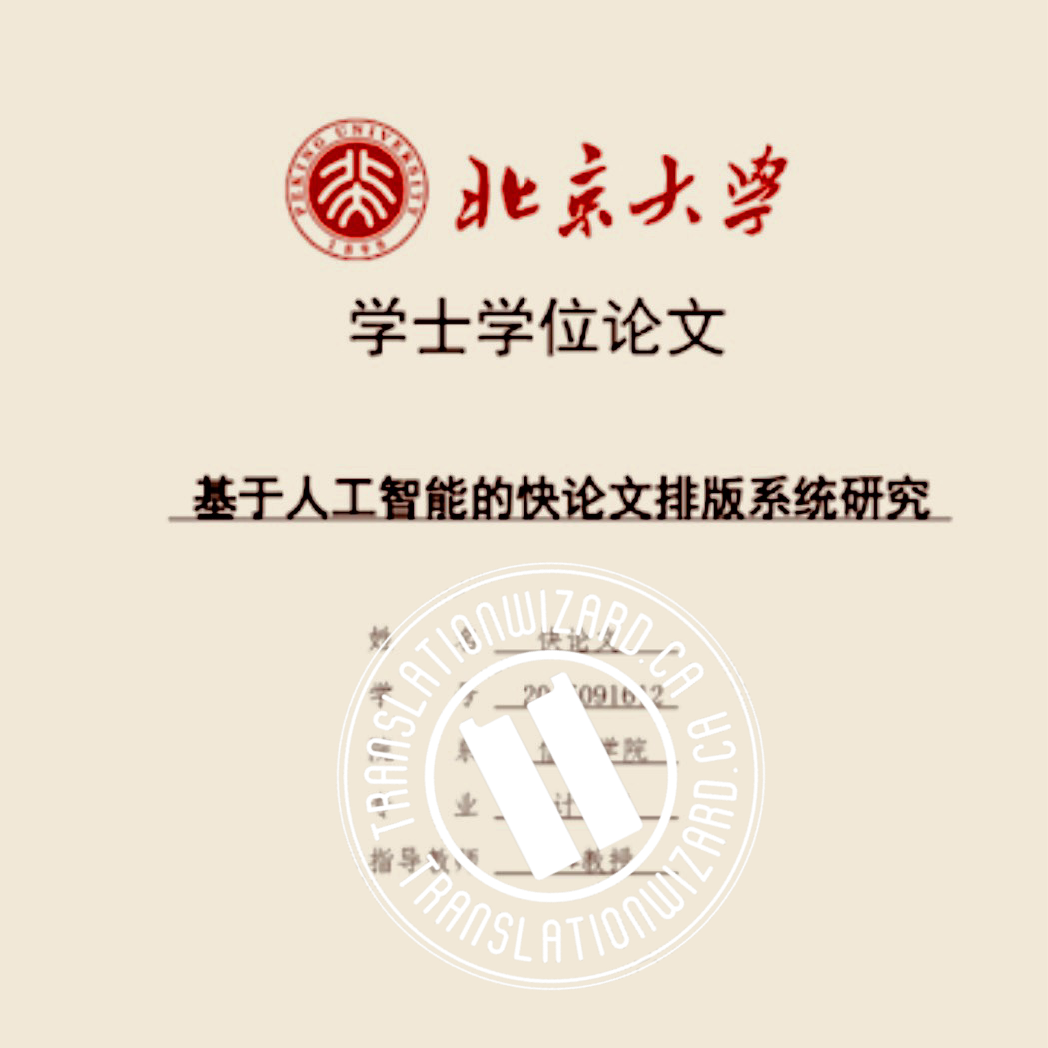
This page provides certified translation services for research papers and academic theses originally written in Chinese. Research papers are commonly produced within universities, research institutes, and graduate programs as part of academic study or scholarly investigation. Because these documents often contain specialized terminology, structured arguments, citations, and analytical discussions, a precise and professionally prepared English translation may be required when the work is presented to institutions, reviewers, or academic bodies outside the original language environment.
A research paper typically presents a clearly defined research question together with the background context, methodology, analysis, and conclusions derived from the study. Academic papers often include an abstract summarizing the research objective, followed by an introduction outlining the scholarly context and relevant literature. Subsequent sections may present theoretical frameworks, data analysis, experimental results, or interpretive arguments depending on the discipline. The document usually concludes with a discussion of findings and a list of references that situate the research within the broader academic field.
Research papers produced in Chinese academic environments frequently follow formal structures used in universities and scholarly publications. These documents may contain citations of previous research, methodological descriptions, diagrams, statistical tables, or specialized technical terminology depending on the field of study. In disciplines such as engineering, computer science, and the natural sciences, research papers may include formulas, charts, and quantitative analysis. In the humanities and social sciences, the focus may instead lie on textual interpretation, theoretical discussion, or historical analysis. Because of these differences, translating a research paper requires careful attention not only to language but also to the conventions of academic writing in English.
In international academic contexts, translated research papers may accompany applications for academic programs, scholarship submissions, credential evaluations, or professional documentation. Institutions reviewing scholarly materials rely on accurate translations to understand the scope and substance of the research being presented. Preserving the structure of the original document—such as section headings, references, and logical argumentation—helps ensure that the translated work reflects the author’s academic intent and intellectual contribution.
Translations associated with academic and scholarly documents are prepared by a Chinese–English certified translator accredited by the Society of Translators and Interpreters of British Columbia (STIBC) and the Association of Translators and Interpreters of Ontario (ATIO). Certified translations help ensure that specialized terminology, scholarly arguments, and technical expressions are conveyed faithfully in English while maintaining the integrity and structure of the original research work.
Certified Translation of a Research Paper or Academic Thesis
This page provides certified translation services for research papers and academic theses originally written in Chinese. Research papers are commonly produced within universities, research institutes, and graduate programs as part of academic study or scholarly investigation. Because these documents often contain specialized terminology, structured arguments, citations, and analytical discussions, a precise and professionally prepared English translation may be required when the work is presented to institutions, reviewers, or academic bodies outside the original language environment.
A research paper typically presents a clearly defined research question together with the background context, methodology, analysis, and conclusions derived from the study. Academic papers often include an abstract summarizing the research objective, followed by an introduction outlining the scholarly context and relevant literature. Subsequent sections may present theoretical frameworks, data analysis, experimental results, or interpretive arguments depending on the discipline. The document usually concludes with a discussion of findings and a list of references that situate the research within the broader academic field.
Research papers produced in Chinese academic environments frequently follow formal structures used in universities and scholarly publications. These documents may contain citations of previous research, methodological descriptions, diagrams, statistical tables, or specialized technical terminology depending on the field of study. In disciplines such as engineering, computer science, and the natural sciences, research papers may include formulas, charts, and quantitative analysis. In the humanities and social sciences, the focus may instead lie on textual interpretation, theoretical discussion, or historical analysis. Because of these differences, translating a research paper requires careful attention not only to language but also to the conventions of academic writing in English.
In international academic contexts, translated research papers may accompany applications for academic programs, scholarship submissions, credential evaluations, or professional documentation. Institutions reviewing scholarly materials rely on accurate translations to understand the scope and substance of the research being presented. Preserving the structure of the original document—such as section headings, references, and logical argumentation—helps ensure that the translated work reflects the author’s academic intent and intellectual contribution.
Translations associated with academic and scholarly documents are prepared by a Chinese–English certified translator accredited by the Society of Translators and Interpreters of British Columbia (STIBC) and the Association of Translators and Interpreters of Ontario (ATIO). Certified translations help ensure that specialized terminology, scholarly arguments, and technical expressions are conveyed faithfully in English while maintaining the integrity and structure of the original research work.